Memorial Day is one of the most solemn and meaningful holidays in the United States. It is a day set aside to remember and honor the men and women who lost their lives while serving in the U.S.

Dated: November 18 2023
Views: 2061
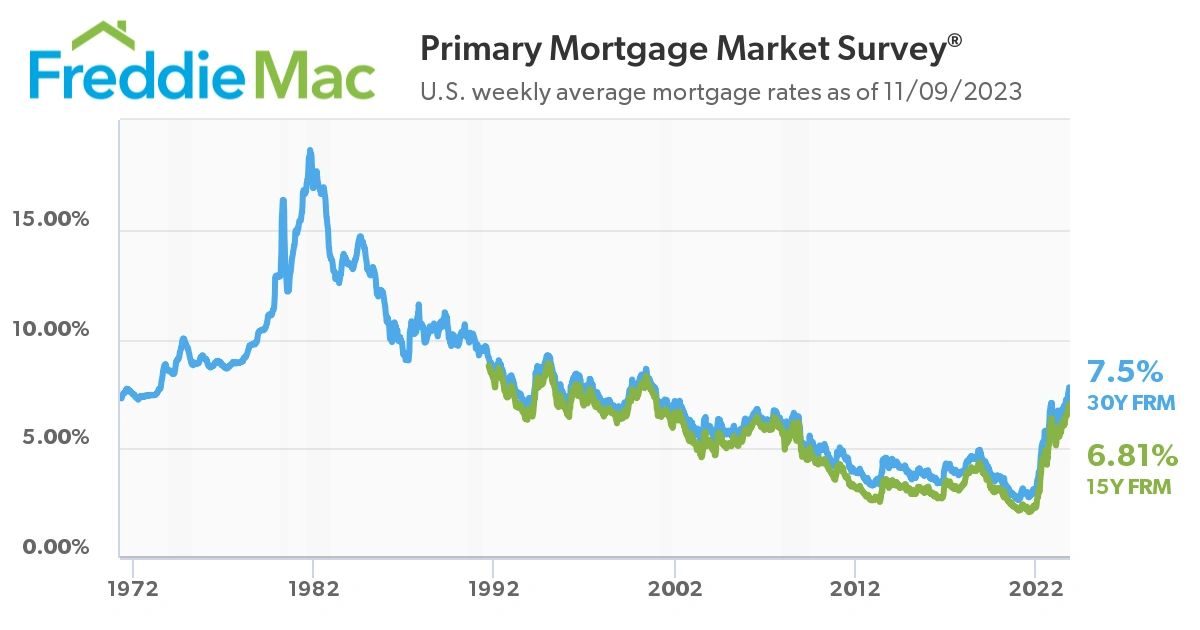
The real estate market is influenced by various factors, and two key elements that shape it are mortgage rates and home prices. Looking back at the past five decades, we can observe intriguing patterns between mortgage rates and housing costs. In this article, we'll explore the historical mortgage rate trends from 1970 until now and examine their impact on home prices.
The 1970s: Turbulence and High Rates
The 1970s introduced a period of economic turbulence, characterized by high inflation rates and rising mortgage interest rates. During this decade, mortgage rates began hovering around 7%, gradually increasing towards double digits. Simultaneously, home prices exhibited a notable rise, primarily as a result of increasing demand and limited supply.
The 1980s: Volatility and Fluctuations
The 1980s experienced significant fluctuations in mortgage rates. The decade opened with rates averaging around 13%, skyrocketing to an all-time high of nearly 19% in the early '80s. These soaring rates contributed to a decline in home prices, as high borrowing costs deterred potential buyers.
The 1990s: Declining Rates and Housing Recovery
The 1990s saw a steady decline in mortgage rates, which dropped to an average of around 8%. This decrease in rates spurred a housing market recovery, as affordable borrowing costs attracted buyers. Subsequently, home prices experienced an upward trajectory, showcasing consistent growth throughout the decade.
The 2000s: Low Rates and Housing Bubble
The early 2000s witnessed historically low mortgage rates. Rates reached record lows of around 5%, stimulating increased demand for housing. This surge in demand, coupled with relaxed lending practices, led to a housing bubble. Home prices skyrocketed, surpassing realistic values in many areas.
The 2010s: Recovery and Record-Breaking Lows
The aftermath of the housing crisis prompted a period of economic recovery, coupled with efforts to stimulate the housing market. Mortgage rates experienced a notable downward trend, reaching unprecedented lows. Rates fluctuated within the range of 3%–5%, enhancing affordability. Consequently, home prices gradually rebounded, marking a steady appreciation in most regions.
The 2020s: Historic Lows and Current Trends
The 2020s witnessed historic lows in mortgage rates, plummeting below 3% as a response to economic uncertainties and central bank measures aimed at mitigating the impact of the COVID-19 pandemic. These exceptionally low rates have persisted, fueling increased demand and continued appreciation in home prices. However, as we transitioned into 2022 and 2023, mortgage rates saw an upward trajectory influenced by factors such as high inflation, a robust housing market, shifts in Federal Reserve policies, persistent inflationary pressures, and heightened consumer spending. The Federal Reserve's revised economic projections also played a role in this trend. Some analysts anticipate a further rise in mortgage rates in 2024, while others suggest the possibility of a decline if the U.S. enters a recession. Sturtevant from Bankrate predicts a decrease in rates owing to reduced mortgage demand and ongoing efforts to address inflation. As of October 30, 2023, the average cost of a five-year fixed-rate mortgage stood at 5.21%, a two-year tracker rate mortgage was at 5.73%, and the typical lender's standard variable rate (SVR) was recorded at 7.95%.
The relationship between mortgage rates and home prices is complex and constantly evolving. Over the past five decades, we have observed the impact of varying mortgage rates on the real estate market. High rates often correlate with restrained demand and lower home prices, while low rates tend to encourage buying and drive home prices upward. As the market continues to evolve, it is essential for prospective buyers and sellers to monitor mortgage rate trends alongside home prices to make informed decisions.

Looking to buy or sell real estate in North Port, Port Charlotte, Englewood, Venice, or the surrounding Southwest Florida area? Eugene Kovalov is a local Realtor dedicated to helping buyers and seller....
Memorial Day is one of the most solemn and meaningful holidays in the United States. It is a day set aside to remember and honor the men and women who lost their lives while serving in the U.S.
As of February 2025, the real estate market in North Port, Florida, is experiencing notable shifts, presenting both challenges and opportunities for buyers and sellers.Market OverviewIn January,
If you’ve ever watched a house-hunting show on TV, it probably seemed like a breeze. Buyers tour a few homes, have a quick chat, and make their decision—all wrapped up in a single.
When dreaming about sprucing up your home, it’s easy to assume every upgrade will add value. But guess what? Not every shiny new addition or luxurious renovation will make potential buyers
 Copyright © MFRMLS.com All information deemed reliable but not guaranteed. All properties are subject to prior sale, change or withdrawal. Neither listing broker(s) or information provider(s) shall be responsible for any typographical errors, misinformation, misprints and shall be held totally harmless. Listing(s) information is provided for consumers personal, non-commercial use and may not be used for any purpose other than to identify prospective properties consumers may be interested in purchasing. Information on this site was last updated Last updated on September 23, 2026 5:29 AM UTC The listing information on this page last changed on Last updated on September 23, 2026 5:29 AM UTCd. The data relating to real estate for sale on this website comes in part from the Internet Data Exchange program of MFR MLS.
All information deemed reliable but not guaranteed. All properties are subject to prior sale, change or withdrawal. Neither listing broker(s) or information provider(s) shall be responsible for any typographical errors, misinformation, misprints and shall be held totally harmless. Listing(s) information is provided for consumers personal, non-commercial use and may not be used for any purpose other than to identify prospective properties consumers may be interested in purchasing.
Updated on September 23, 2026 5:29 AM UTC
Copyright © MFRMLS.com All information deemed reliable but not guaranteed. All properties are subject to prior sale, change or withdrawal. Neither listing broker(s) or information provider(s) shall be responsible for any typographical errors, misinformation, misprints and shall be held totally harmless. Listing(s) information is provided for consumers personal, non-commercial use and may not be used for any purpose other than to identify prospective properties consumers may be interested in purchasing. Information on this site was last updated Last updated on September 23, 2026 5:29 AM UTC The listing information on this page last changed on Last updated on September 23, 2026 5:29 AM UTCd. The data relating to real estate for sale on this website comes in part from the Internet Data Exchange program of MFR MLS.
All information deemed reliable but not guaranteed. All properties are subject to prior sale, change or withdrawal. Neither listing broker(s) or information provider(s) shall be responsible for any typographical errors, misinformation, misprints and shall be held totally harmless. Listing(s) information is provided for consumers personal, non-commercial use and may not be used for any purpose other than to identify prospective properties consumers may be interested in purchasing.
Updated on September 23, 2026 5:29 AM UTC
33. Required DMCA Notice
The Digital Millennium Copyright Act of 1998, 17 U.S.C. §512, the DMCA, provides recourse for copyright owners who believe that material appearing on the Internet infringes their rights under U.S. copyright law. If you believe in good faith that any content or material made available in connection with our website or services infringes your copyright, you (or your agent) may send us a notice requesting that the content or material be removed, or access to it blocked. Notices must be sent in writing by email to DMCAnotice@MLSGrid.com. The DMCA requires that your notice of alleged copyright infringement include the following information: (1) description of the copyrighted work that is the subject of claimed infringement; (2) description of the alleged infringing content and information sufficient to permit us to locate the content; (3) contact information for you, including your address, telephone number and email address; (4) a statement by you that you have a good faith belief that the content in the manner complained of is not authorized by the copyright owner, or its agent, or by the operation of any law; (5) a statement by you, signed under penalty of perjury, that the information in the notification is accurate and that you have the authority to enforce the copyrights that are claimed to be infringed; and (6) a physical or electronic signature of the copyright owner or a person authorized to act on the copyright owners behalf. Failure to include all of the above information may result in the delay of the processing of your complaint.
 All information regarding a property for sale, rental or financing, school information and public tax records is from sources deemed reliable; PROVIDED, HOWEVER, that representations and warranties are not made about the accuracy thereof, and such information is subject to errors, omissions, updates, modifications, changes of price, rent rates, commissions, prior sales, leases or financing, changes in school boundaries, or withdrawal without notice. All information displayed on this Website should
be independently verified if any person intends to engage in a transaction based upon such information.
Show More...
All information regarding a property for sale, rental or financing, school information and public tax records is from sources deemed reliable; PROVIDED, HOWEVER, that representations and warranties are not made about the accuracy thereof, and such information is subject to errors, omissions, updates, modifications, changes of price, rent rates, commissions, prior sales, leases or financing, changes in school boundaries, or withdrawal without notice. All information displayed on this Website should
be independently verified if any person intends to engage in a transaction based upon such information.
Show More...
 © 2026 Florida Gulf Coast MLS (FGCMLS) Information deemed reliable, but not guaranteed. The IDX data relating to real estate for sale on this web site comes in part from the Florida Gulf Coast Multiple Listing Service. The information being provided is for consumers' personal, non-commercial use and may not be used for any purpose other than to identify prospective properties consumers may be interested in purchasing. Information is deemed reliable but not guaranteed.
